Glad to share another short piece on the TRIPS waiver discussion, originally published in the Blog of the Rosa-Luxemburg-Stiftung’s (RLS) Geneva office in April 2022 . Unfortunately this piece has not aged well, as the outcome of the mobilization spear-headed by India and South Africa and shouldered and pushed forward by a wide coalition of civil society groups did not achieve (by far) the desired goals.
Breaking the cycle of profits and patents in a pandemic
The COVID-19 pandemic, which brought in its wake so much heartache and turmoil, did not happen in a vacuum, but within already established structures of social inequity and patterns of political imbalance. The development and subsequent procurement of vaccines followed—and continues to follow—a trend whereby the wealthy were the first to access medical technologies, while the rest were forced to wait and hope for the best. A profit-driven biomedical research and development model and the important role that intellectual property (IP) plays in the business strategies of large, transnational pharmaceutical companies were also strong winds for the perfect storm.
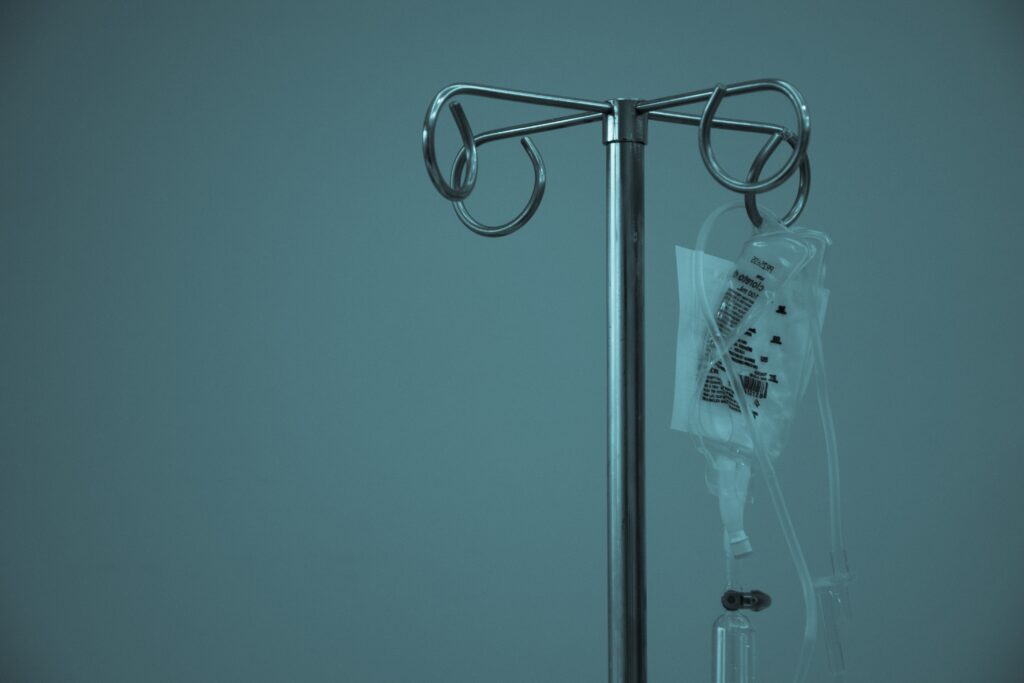 |
| Access to health technlogies is often hindered by stringent enforcement of IP rights, COVID-19 pandemic was an example of how upholding patents and associated monopolies were considered by some as more important than providing access ot life-saving health goods. Picture by Marcelo Leal / Unsplash |
Solidarity is never as close and necessary to survival as when a threat, like a pandemic, makes no distinction between border or wealth, and no country would escape unscathed. The response from the international community veered from the hefty words in the early days of the pandemic proclaiming vaccines to be global public goods, to the ensuing confusing multiplication of initiatives with lofty ambitions of global distribution of vaccines. Finally, we settled on the realization that, for the European Union and other pharma-friendly governments, even in such unprecedented times, it would be business as usual when it comes to IP and access to health technologies.
The waiver as a solution and indictment
That is why the proposal for a temporary TRIPS waiver on COVID-19 health technologies, submitted by South Africa and India in October 2020 (and revised with additional co-sponsors in May 2021), was timely and remains relevant[1]. It highlighted the fact that IP rules backed by the World Trade Organization (WTO) TRIPS Agreement were allowing for monopolies life-saving health goods. In addition, the limited existing manufacturing capabilities (located essentially in the United States, European Union, United Kingdom and a few other countries) were clearly insufficient to meet global demand; the conditions for the scramble for vaccines, as had happened with Personal Protective Equipment were set.The proposal was, initially, met with skepticism by the European Union, the US and a few additional countries like the UK and Switzerland. As the number of co-sponsoring governments grew, as did the support from civil society and academics, the position of the EU hardened and turned into strong opposition, even to the notion of a waiver.
Positions on the waiver evolved in some cases and hardened in others. The US, followed by other countries like Australia, publicly announced that they would not oppose to a waiver as long as it was limited to vaccines (hence excluding all other health technologies). The EU meanwhile did not even consider the issues raised by South Afria and India when presenting their response (self-styled as counterproposal) which essentially identified streamlining the use of compulsory licenses and lifting export controls as the best measures to counter shortcomings in production and delivery of COVID-19 related health goods.
Hope amidst the rage
Pace of events picked up in early 2022, after the cancellation of the 12th WTO Ministerial Conference in November of last year, with numerous informal meetings between the US, the EU, India and South Africa[5](known as the Quad group). It was difficult to ascertain what was being discussed due to the lack of transparency and confidential nature of the conversations. The fate of trade, global health and multilateralism decided behind closed doors.[2] See WORLD TRADE ORGANIZATION (WTO) Declaration on the TRIPS agreement and public healthDOHA WTO MINISTERIAL 2001: TRIPS WT/MIN(01)/DEC/2 20 November 2001 Accessible at https://www.wto.org/english/thewto_e/minist_e/min01_e/mindecl_trips_e.htm Consulted 18 March 2022 Of special interest was paragraph 6 “ We recognize that WTO members with insufficient or no manufacturing capacities in the pharmaceutical sector could face difficulties in making effective use of compulsory licensing under the TRIPS Agreement. We instruct the Council for TRIPS to find an expeditious solution to this problem and to report to the General Council before the end of 2002” which was the object of protracted negotiations which would culminate, in 2017, with the adoption of Art. 31 bis as an amendment to the TRIPS agreement.
[3] information on European Union’ s support for Covax, ACT-A as well as “vaccine sharing” and other initiatives at EUROPEAN COMMISSION Global response to Coronavirus Accessible at https://ec.europa.eu/info/live-work-travel-eu/coronavirus-response/safe-covid-19-vaccines-europeans/global-response-coronavirus_en Consulted on 18 March 2021
[4] European Council. An international treaty on pandemic prevention and preparedness Accessible at https://www.consilium.europa.eu/en/policies/coronavirus/pandemic-treaty/ Consulted on 18 March 2021
[5] Such quadrilateral dialogue with the support of the WTO DG, also know as Quad group, was deemed as exclusionary by other WTO members like the UK and Switzerland
[6] FURLONG, A Compromise reached on COVID-19 vaccine intellectual property rights waiver Politico Accessible at https://www.politico.eu/article/compromise-reached-on-covid-19-vaccine-intellectual-property-rights-waiver/ Consulted on 18 Mach 2022[7] See WHO Director-General’s opening remarks at first meeting of the Intergovernmental Negotiating Body to draft and negotiate a WHO convention, agreement or other international instrument on pandemic prevention, preparedness and response – 24 February 2022 Accessible at https://www.who.int/director-general/speeches/detail/who-director-general-s-opening-remarks-at-first-meeting-of-the-intergovernmental-negotiating-body-to-draft-and-negotiate-a-who-convention-agreement-or-other-international-instrument-on-pandemic-prevention-preparedness-and-response-24-february-2022 Consulted on 18 March 2022
More info
In the blog
- La Salut Global que no era o com la pandemia ens ha despullat de certeses i veritats impostades. December 2021
- El imperativo moral de prevenir, curar y salvar ante el determinismo de beneficios, mercados y patentes August 2021
- A pandemic response lacking moral leadership. March 2021
Other sources
- Solidarity: Another COVID Victim Anne Jung Rosa Luxembourg Stiftung June 2021
- An Obituary to the TRIPS ‘Waiver’: Lessons from an Imperfect Response Rohan Srivastava Spicy IP April 2023
- WTO fails to reach agreement on providing global access to Covid treatments Weronika Strzyżyńska The Guardian February 2024


No comments:
Post a Comment